Health & Safety Policy — Business Waste Removal Twickenham
This policy sets out the approach to health and safety for our commercial waste service operations and rubbish removal across the service area. It affirms our commitment to providing a safe working environment for staff, contractors and members of the public. Our goal is to eliminate or control risks associated with business rubbish collection and commercial waste removal Twickenham activities through proactive management, training and continuous improvement.Scope and objectives: this policy applies to all business waste removal activities including site collections, on-site handling, vehicle operations, depot processing and transfer work. It covers hazardous and non-hazardous waste, mixed loads and bespoke removal tasks. We aim to comply with statutory requirements while adopting best practice for rubbish clearance, ensuring environmental protection and reducing incident rates across our service area.
Responsibilities and leadership
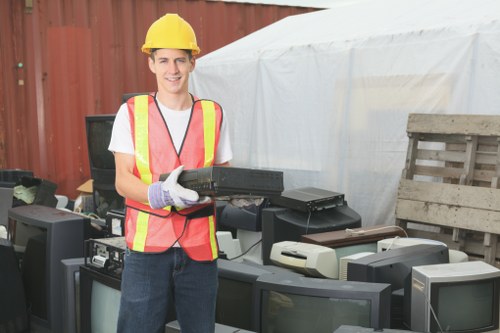
Senior management retains overall responsibility for health and safety policy direction, resource allocation and review. Managers are responsible for implementing safe systems of work, ensuring staff receive appropriate instruction and that risk assessments are current and proportionate. Supervisors must monitor day-to-day compliance for each commercial waste removal Twickenham job and ensure operatives follow documented safe working practices.Worker duties and training
All employees engaged in rubbish removal and business waste collection are required to observe this policy and the procedures that support it. Staff must report hazards and near misses promptly. Training is provided on manual handling, vehicle operations, PPE use and the handling of potentially harmful substances. Records of training, competence assessments and refresher sessions are maintained to support continuous skill development.Risk assessment and control: systematic risk assessments are undertaken for routine and non-routine tasks such as bulky item removal, skip loading, and internal office collections. Controls follow the hierarchy of risk management: elimination, substitution, engineering controls, administrative controls and personal protective equipment. Where residual risk remains, tasks are supervised and additional controls applied to safeguard employees and others.
PPE, manual handling and hazardous materials
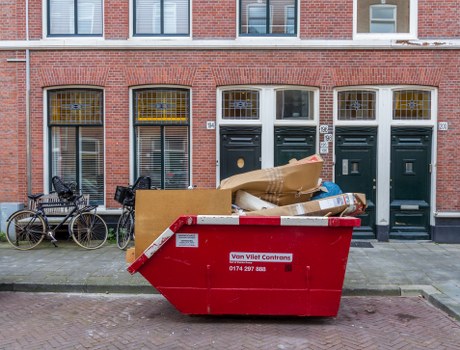
Appropriate PPE is provided and must be used when handling waste: high-visibility clothing, gloves, steel-toe boots and respiratory protection when required. Manual handling protocols minimize lifting injuries; mechanical aids are used for heavy or awkward loads. For hazardous wastes, specific segregation and containment procedures are in place, with clear labelling and secure transportation consistent with relevant waste transport and hazardous material guidance.Vehicle safety and site operations: fleet safety standards are enforced through vehicle checks, maintenance schedules and driver competence assessments. Load security and safe access are primary considerations during rubbish removal rounds. Sites are surveyed on arrival for hazards such as traffic, uneven surfaces and overhead obstructions; operations are adapted accordingly to protect both staff and the public during commercial waste removal tasks.
Emergency procedures and spill response: clear plans are established for incidents including spillage, fire, violent incidents and medical emergencies. Spill kits, fire extinguishers and first aid equipment are provided at depots and on key vehicles. Staff receive training to contain minor spills and to activate emergency services when required. Evacuation and assembly procedures are regularly practiced and reviewed.
 Incident reporting and investigation: all accidents, near misses and dangerous occurrences are recorded and investigated to identify root causes and prevent recurrence. Lessons learned are communicated to teams as part of a no-blame learning culture. Corrective actions are tracked to completion and the effectiveness of changes is monitored through subsequent inspections and audits.
 Contractor and subcontractor management: where external contractors are engaged to support rubbish clearance or ancillary services, they are selected, vetted and monitored for health and safety competence. Contracts set out expectations for compliance with this policy, risk assessment sharing and incident notification. Subcontractors working within our service area must coordinate with our site supervisors and adhere to the same safety standards as direct employees.
Monitoring, audit and continuous improvement: routine site inspections, vehicle checks and scheduled audits measure compliance and identify improvement opportunities. Performance indicators such as incident frequency, near-miss reporting rates and training completion are reviewed by management. Corrective and preventive actions are implemented, and the policy is reviewed annually or sooner following significant change or incident.
Record keeping and policy review: records of risk assessments, safety briefings, training, incidents and maintenance are retained to demonstrate compliance and to support continuous learning. This health and safety policy is issued as a statement of intent and is kept under regular review. Commitment: we commit to delivering safe, sustainable and professional rubbish collection and commercial waste management services across the area, ensuring risks are managed and people are protected at all times.
